
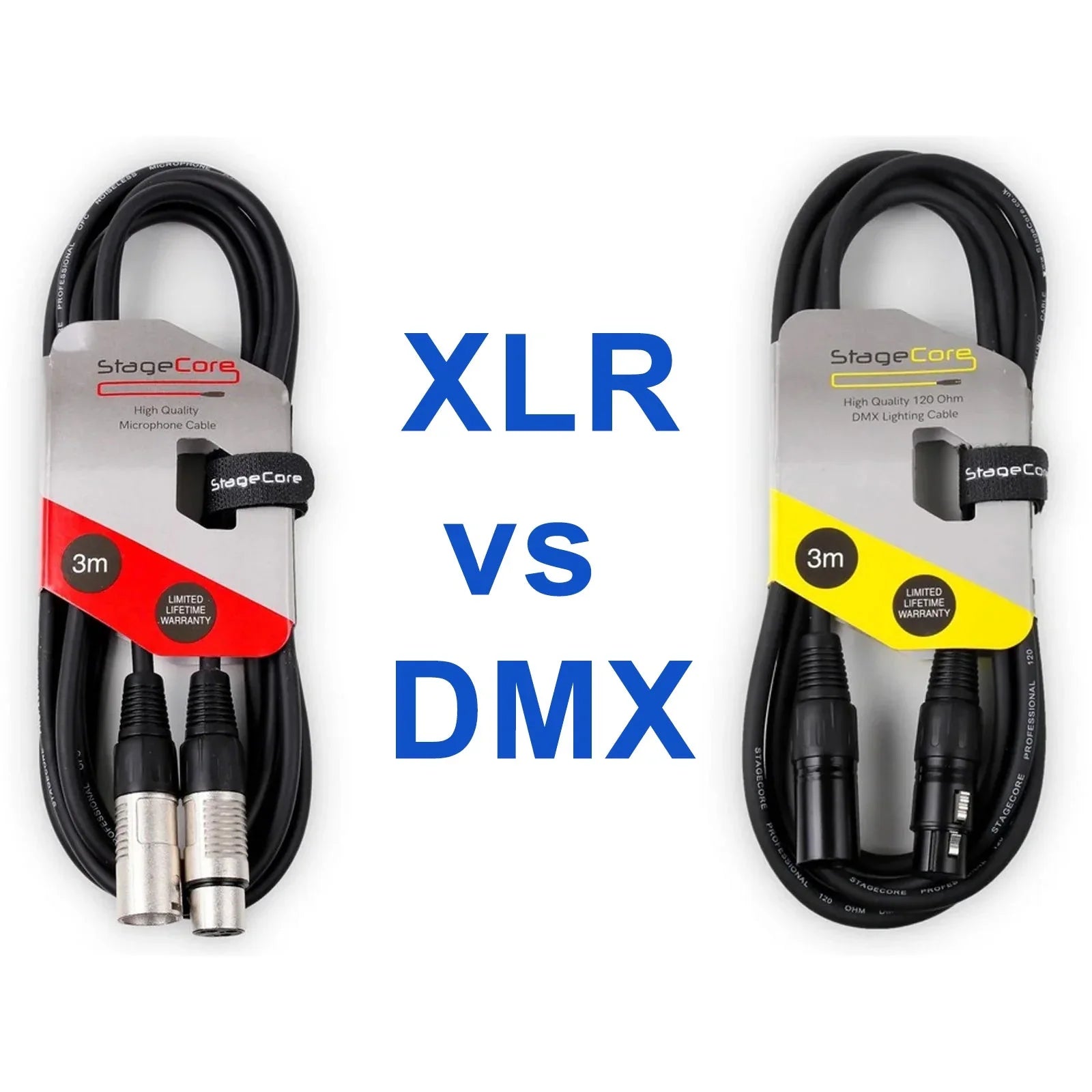
When it comes to professional audio and lighting setups, XLR and DMX cables are two essential components that often get confused. Though both are used for transmitting signals, they serve very different purposes in the world of audio and stage lighting. In this blog post, we’ll break down the key differences between XLR and DMX cables, what each cable is designed for, and where you’ll find them in action.
What is an XLR Cable? 🎶
XLR cables are a standard type of audio cable used primarily for transmitting balanced audio signals. They are widely used in both live sound environments and recording studios. The typical XLR connector has three pins (though some have more) that carry the positive, negative, and ground components of the audio signal, making them excellent at rejecting noise and interference.
Key Features of XLR Cables:
-
Audio Signal Transmission 🎧: Primarily used for audio equipment such as microphones, mixing consoles, speakers, headphones, and more.
-
Balanced Signal 🔇: Designed to carry balanced audio, which reduces interference and maintains signal integrity, making them ideal for long-distance runs.
-
Durable Construction 💪: XLR connectors are designed to be sturdy and can handle a lot of wear and tear, making them reliable for both stage and studio use.
Common Uses for XLR Cables:
-
Microphones 🎤: Most professional microphones use XLR cables to transmit the audio signal to the sound system.
-
Mixing Consoles 🎚️: Connecting microphones, instruments, and audio sources to the mixer.
-
Speakers 🔊: Used to connect audio equipment, such as PA systems, to external speakers.
What is a DMX Cable? 🎇
DMX cables are designed specifically for transmitting digital control signals to stage lighting equipment. DMX (short for Digital Multiplex) is the industry-standard protocol used to control lighting rigs, effects, and other devices in professional environments like concerts, theaters, and live shows. Unlike XLR cables, which transmit audio, DMX cables carry control data that dictate how lights behave — whether they flash, change colors, or move in sync with music.
Key Features of DMX Cables:
-
Lighting Control 💡: Primarily used for controlling lighting systems, stage effects, and other DMX-compatible devices.
-
One-Way Data Transmission 📡: Unlike XLR cables, which are used for two-way communication (input and output), DMX cables carry one-way data from a controller to the lighting fixtures.
-
Low-Voltage Digital Signal ⚡: DMX cables carry digital signals at low voltage, meaning they don't carry audio signals but instead send commands to lighting devices.
Common Uses for DMX Cables:
-
Stage Lighting 💡: DMX cables control lighting rigs, creating effects, colors, and patterns.
-
Moving Heads & Effects 🎯: Used to control moving lights, gobos, lasers, and other dynamic effects.
-
Smoke & Pyrotechnic Effects 🎆: DMX can even be used to control non-lighting equipment such as smoke machines and pyrotechnics in professional performances.
Key Differences Between XLR and DMX Cables
While both XLR and DMX cables look similar — they often have the same 3-pin connectors — there are important distinctions between the two. Let’s explore the key differences:
| Feature | XLR Cables | DMX Cables |
|---|---|---|
| Purpose | Audio signal transmission | Digital control signal for lighting |
| Signal Type | Balanced audio signal (analog) | Digital data signal (control) |
| Common Uses | Microphones, audio equipment, speakers | Lighting control systems, stage effects |
| Transmission Type | Bi-directional (input and output) | Uni-directional (one-way) |
| Cable Construction | Generally has 3 conductors (pins) | Typically uses twisted pair cables to carry data |
| Typical Connector | 3-pin XLR connectors | 3-pin or 5-pin XLR connectors |
| Signal Length | Can be used for long cable runs (up to 100 meters) | Typically used for shorter cable runs (up to 100 meters) |
Why Not Use an XLR Cable for DMX and Vice Versa? 🤔
While both XLR and DMX cables use the same 3-pin connectors, their internal wiring and signal types are different. Here’s why they are not interchangeable:
-
Signal Differences 📡: XLR cables carry analog audio signals, while DMX cables are used for digital data transmission. Using an XLR cable for DMX can cause data corruption, resulting in unreliable lighting control, while a DMX cable used for audio will not work because it cannot carry an analog signal effectively.
-
Impedance Mismatch ⚡: DMX cables are typically shielded and designed with low impedance, which is crucial for stable signal transmission in long cable runs. XLR cables, on the other hand, are designed for audio signals and may not provide the same stability when used for lighting control.
When to Use XLR Cables vs. DMX Cables 🎤🎇
Use XLR Cables:
-
For microphones, mixers, and audio equipment that require balanced audio signals.
-
When you need to transmit high-fidelity audio over long distances without interference.
Use DMX Cables:
-
For controlling lighting fixtures, moving heads, and stage effects that require digital data signals.
-
When you need reliable control of lighting systems in a professional performance or event setting.
Conclusion: XLR vs. DMX Cables – Choose the Right One for Your Setup 🎶🎇
While XLR and DMX cables may look similar on the outside, they serve entirely different purposes. XLR cables are essential for transmitting high-quality audio signals for microphones and sound systems, while DMX cables are used for lighting control in professional events. Understanding the difference between these two cables is key to setting up a flawless audio-visual experience.
Make sure to choose the right cable for the right application — using an XLR cable for lighting or a DMX cable for audio won’t give you the performance you’re after. By selecting the correct cables, you’ll ensure your sound and lighting systems function seamlessly.

